Challenge assumptions
Design for productive disagreement instead of a single confident answer. Agreement is not automatically verification.
I design the architecture, governance, and operating model for multi-agent AI in high-stakes environments—so systems challenge assumptions, preserve human judgment, and make reasoning auditable.

Zafar S. Khan
Point of view
Technology expands the decision surface. It does not remove responsibility for the decision.
"AI should challenge leadership, not just echo it."
Models generate options. They do not own outcomes. The strategic work is framing the question, knowing which dissent matters, and carrying the consequence when a choice proves hard.
That is why architecture matters: it is the control surface that makes reasoning, evidence, and accountability durable under real operating pressure.
Read the point of view →A working method
Responsible enterprise AI needs more than a capable model. It needs a visible argument, meaningful challenge, and a human owner at the point of consequence.
Design for productive disagreement instead of a single confident answer. Agreement is not automatically verification.
Give leaders the trace from question to evidence, trade-off, and decision—before automation scales the consequence.
Place human judgment at consequential gates and use every correction to improve the system behind the recommendation.
Executive practice
Designs AI systems to surface dissent, expose uncertainty, and sharpen the choices leadership must own.
Builds the controls, evaluation loops, and human gates that turn autonomous capability into accountable work.
Connects technology change to operating reality, so adoption is measured in trust and execution—not presentation volume.
Uses architecture to protect continuity through change and make the next generation of products possible.
Selected work
A high-stakes AI system must make its reasoning, exceptions, and human decisions visible—not merely deliver a confident output.
Decision support
Structured challenge
Human verification
Accountable review
Governance
Learning from correction
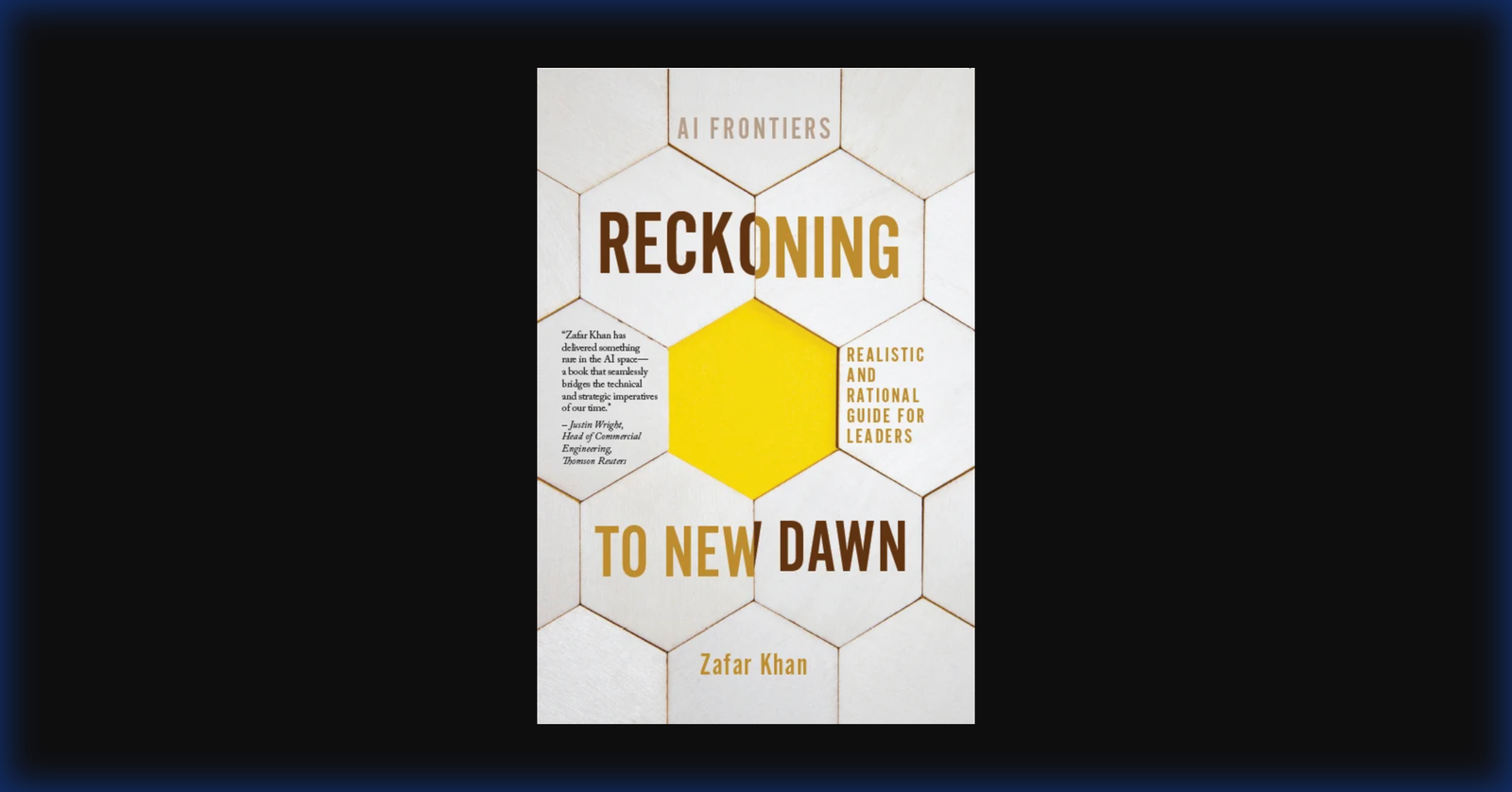
Written work
A guide to the strategic intersection of artificial intelligence and corporate strategy—from governance to operationalizing agentic systems.